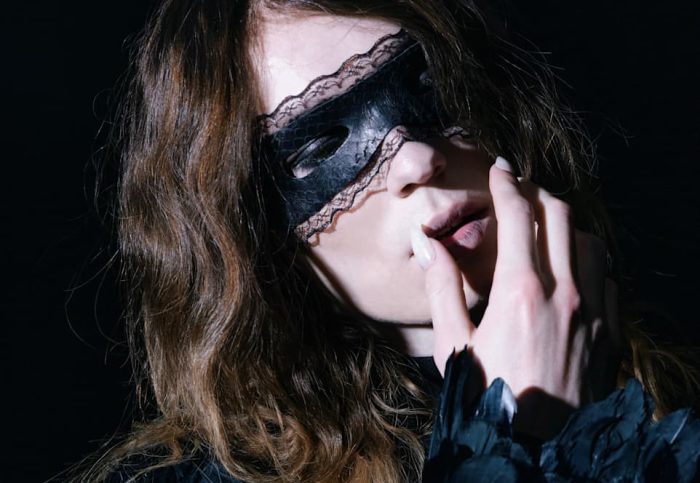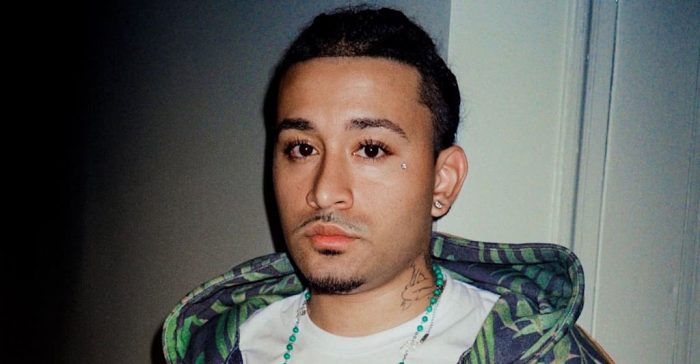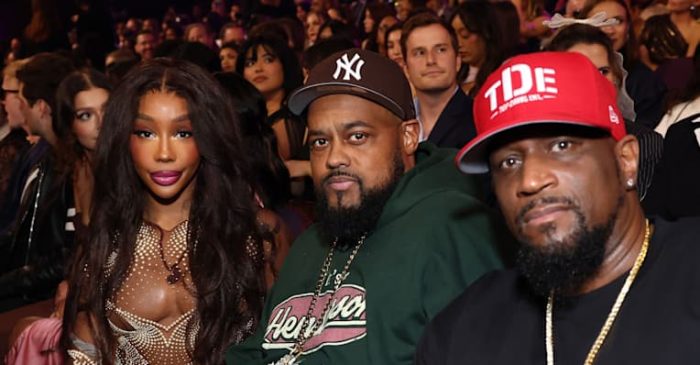


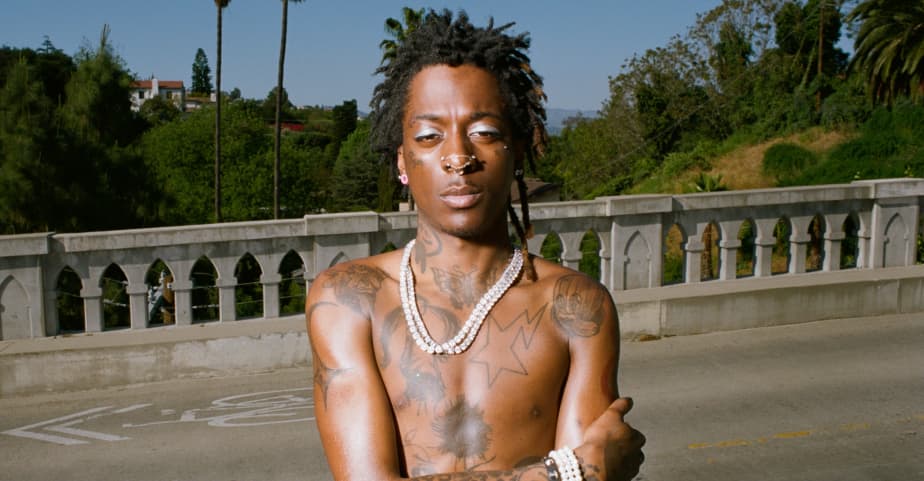
Skaiwater is hiding from their fans. Ninety seconds earlier, the 25-year-old had popped out from the backstage catacombs of Chicago’s Avalon Music Hall, hunting for a quiet spot to spark up. But the escape was short-lived; they’d exited too close to the stage and were promptly spotted by a handful of people lingering near coat check. Skai turns on their heel before the throng can even think to mob them and bursts into giggles. Now in a further corner, they feel safe. Their lighter is like a flare in the shadows, but at this distance, their fans couldn’t photograph them if they tried.
Editor’s note: skaiwater is nonbinary and uses she/they pronouns. This story uses the singular they for consistency.
The Madhouse Tour
Skaiwater has been on tour for 19 days. Tonight is show 13 of 15 and their second performance in Chicago. Skaiwater deliberately chose to book smaller venues, attempting to recapture the intimate, raw energy of live music. As a result, they say, the tour so far has been “pretty fried.” Every night, fans rush on stage just to fling themselves off. “I said to someone the mosh pit looked like boiling water,” skaiwater says.
Skaiwater’s vision for the tour was for it to be a “madhouse,” an apt summary of how their music feels. On their 2024 album #gigi, they filtered regional scenes like baile funk and Jersey club into a bass-blown reinvention of dance music. Their latest album, February’s wonderful, abandoned that for straight-up chaos: elements of beats redline, melodies peak through layers of Auto-Tune and distortion, and endlessly sampled vocals smash into each other at similar frequencies. Over the cacophony, skai raps about sex, drugs, and their rock & roll lifestyle, but also explores the way money and success corrupt art and love.
“In the nepotism sense, I’m my own father, you feel me?” they say. “I’m the son of what I’ve done before.”
Defining the Present Moment
All art offers a window into the time of its creation, but more than any other contemporary musician, skaiwater sounds like the brutal, beautiful chaos of now. Post-genre and fitting alongside the digital maximalism of artists like 100 gecs and Jim Legxacy, skaiwater’s music can feel like being beset with notifications or pop-up ads. The overstimulation is part and parcel of understanding their vision of rap music today—what it’s like living in a country that supports fascism at home and genocide abroad, and all the mindless complacency that fuels these cycles of violence.
Skaiwater was born Tyler Ryan Lee Jordan Brooks in Nottingham, U.K. Growing up, they were a “mummy’s boy,” heavily influenced by the R&B and garage music their mother played. Their father, a Yeezy fan, taught them the art of the sample. By the time they reached their late teens, they were navigating the industry, eventually signing with major labels before deciding to go independent in February 2025. This move was a declaration of autonomy, a way to protect their idiosyncratic sound from the pressures of the attention economy.
“I feel like hip-hop is one of the world’s greatest versions of journalism and it made sense for me to just… talk,” they say. “Misogyny extends to everything we consume, that’s kind of what I’m trying to get out with my art. I didn’t lie on the album at all. The life I live… it’s like bro, this industry was here before any of us. I just feel like I’m documenting the state of the world.”