

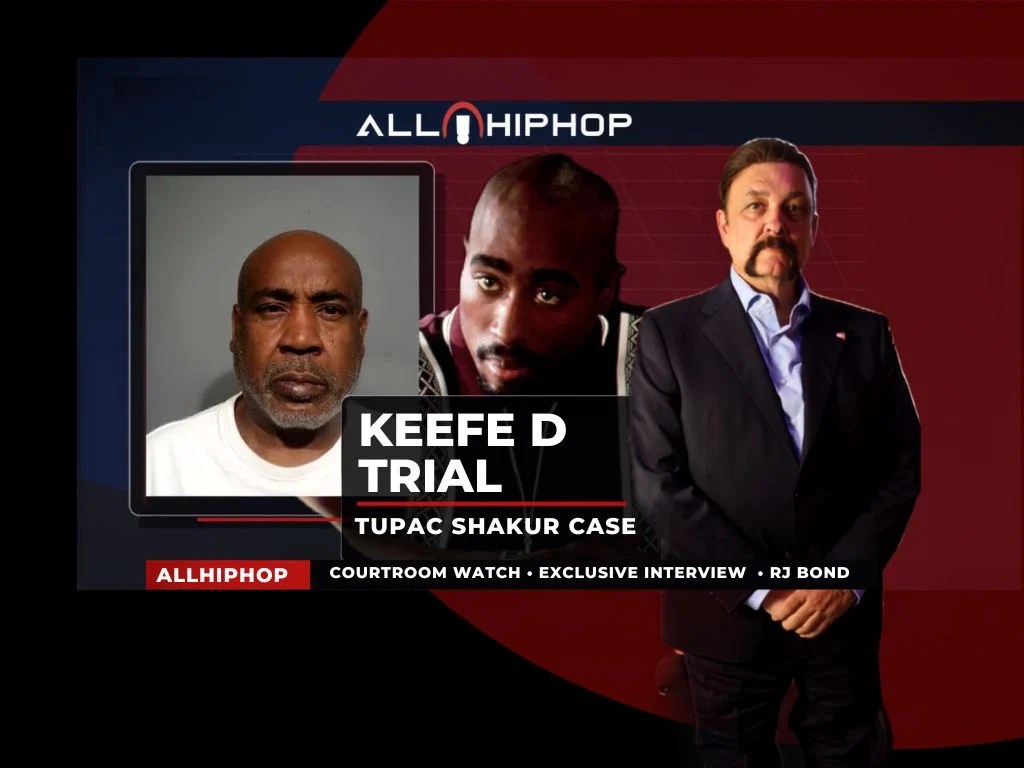
Nearly 30 years after the tragic murder of Tupac Shakur on the Las Vegas Strip, the case remains one of the most enduring mysteries in hip-hop history. For years, the public narrative has centered on Duane Keith Davis, better known as Keffe D, who has frequently discussed his alleged role in the killing through memoirs, interviews, and media appearances. Following his 2023 arrest, many observers assumed the case was effectively closed. However, filmmaker and investigative consultant RJ Bond argues that the public may be mistaking compelling stories for actual legal evidence.
The Distinction Between Blame and Justice
Bond, who has spent nearly two decades dissecting police files and producing documentaries on the murders of both Tupac and The Notorious B.I.G., currently serves as an unpaid consultant for Keffe D’s defense team. His objective, he maintains, is not to advocate for innocence but to ensure that the judicial process relies on facts rather than public sentiment. “Blame is easy. Justice is hard,” Bond explains. “If Keffe D is guilty, prove it. If he isn’t, don’t convict him just because people want closure.”
Bond’s skepticism stems from a lack of physical evidence. He points to the absence of the murder weapon, the vehicle involved, and reliable eyewitness testimony. Instead, he argues that the prosecution has leaned heavily on Keffe D’s own public statements and his book, Compton Street Legend. Bond warns against using autobiographical accounts as sworn testimony, noting that such works often contain embellishments, dramatizations, or “autofiction” that can blur the line between reality and narrative.
Questioning Law Enforcement Tactics
Beyond the evidence itself, Bond questions the investigative history of the case, particularly why law enforcement previously utilized Keffe D as an informant rather than pursuing a conviction. He suggests that the reliance on his cooperation in exchange for leniency in other legal matters created an environment where Keffe D was incentivized to tell stories that investigators wanted to hear. “If police officers and attorneys are telling you there’s no downside to talking, that you’re protected, that you won’t be prosecuted… why wouldn’t you talk? That doesn’t automatically make everything you say true,” Bond asserts.
As the legal proceedings continue, Bond views this trial as a potential final chapter in the decades-long search for answers regarding Tupac’s death. He emphasizes that the outcome will be etched into history, making it imperative that the court prioritizes certainty over convenience. With the defense team navigating years of complex documentation, the focus remains on whether the prosecution can bridge the gap between the stories told in the media and the rigorous standards required for a criminal conviction.