

If you wanted to listen to Standing on the Corner II over the past year, you had to buy the full-length album, complete with an accompanying film, on DVD. But actually purchasing that DVD was easier said than done. A year ago, on September 11th, 2025, a person dressed as Mickey Mouse stood still in bustling Times Square, which ranks alongside subway buskers and public urination as the most ignorable sights of New York City. But eagle-eyed fans of Standing on the Corner who heeded a single Instagram announcement that morning could hand the mouse $50 for a copy of the album.
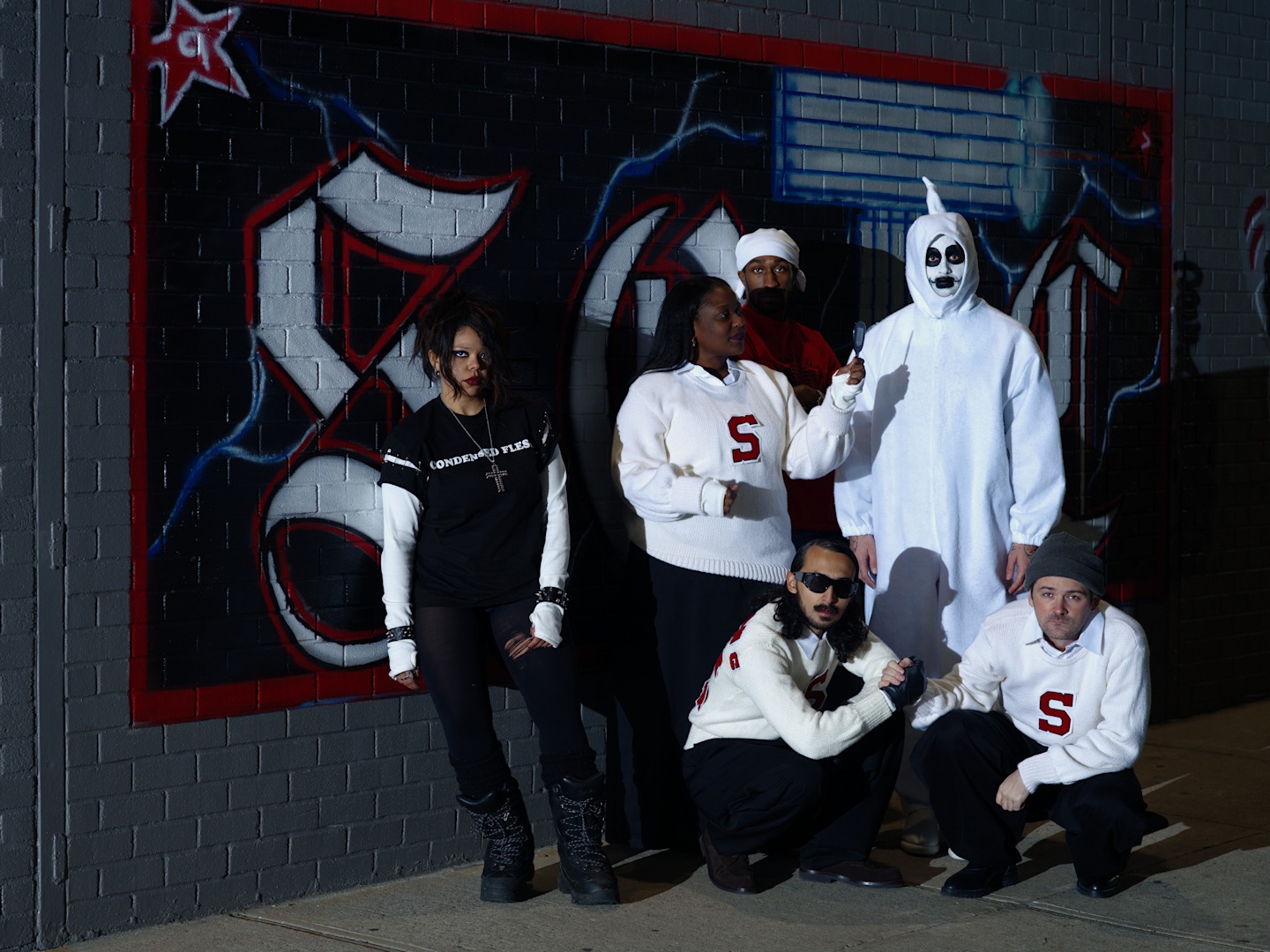
If they missed out at Times Square, maybe they stopped by a listening event that November featuring 89-year-old pianist Bertha Hope, or an intimate concert at the legendary Sugar Hill Restaurant & Supper Club featuring the band and Styles P. What initially seemed like a wild goose chase revealed itself as a patient tour of New York, woven together by the people and places that have shaped the group’s life in the city.
Released as an hour-long music video with pseudonymized features and no digital presence, Standing on the Corner II was a daring experiment in attention and rebellion against the vicious media cycle. But today, September 11th, 2026, exactly a year after the initial release, the project has arrived on streaming services, allowing the masses to experience Gio Escobar and his ensemble’s grand statement on our shared sacred past and daunting present circumstances.
“I’m repulsed by media, in a different way than when I was studying it,” says Escobar when we meet for an interview. “Now I’m on the other end of it, and I recognize just how much of it really is about generating revenue for people who are selling something they have absolutely nothing to do with.”
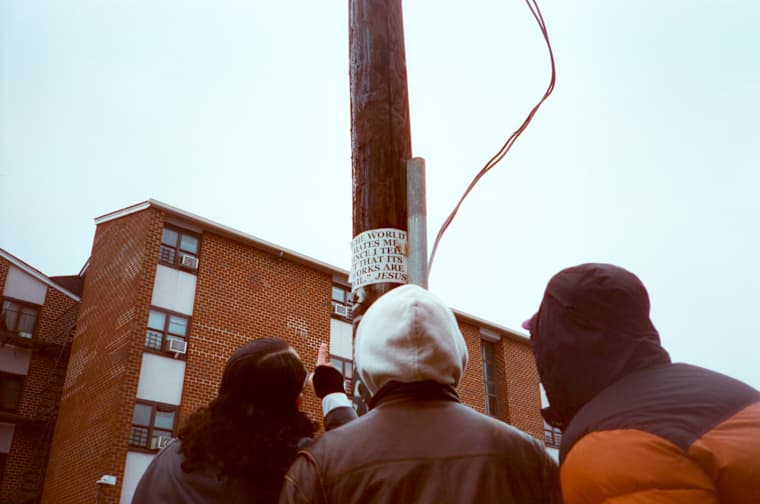
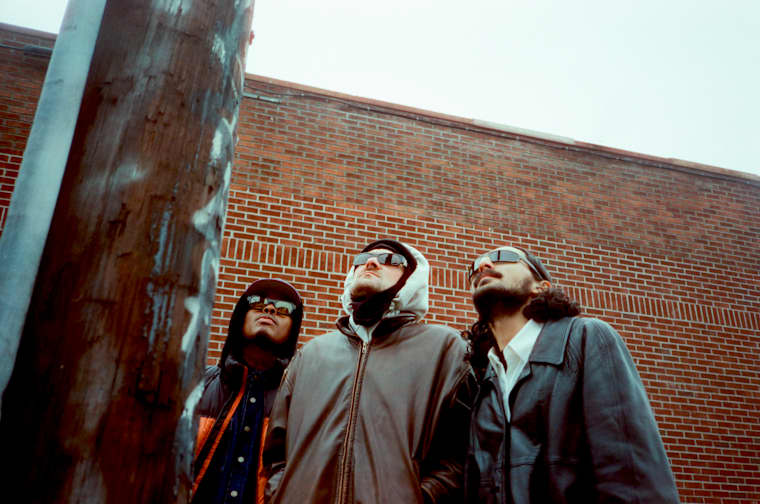
Escobar, who attended The New School for journalism and jazz, resents the media the way only someone who deeply understands its machinations could. Culture dies after commodification, he tells me, especially Black and brown youth culture. But the creative process, like life in general, is full of contradictions. The album was kept off the internet thanks to audio ID technology undeniably intertwined with the much-feared apparati of the surveillance state. And while the end credits of the DVD read in part, “This has been made possible by a dollar amount of: $0.00 from XL Recordings,” that label is responsible for bringing Standing on the Corner II to traditional streaming platforms.
“I’m realistic about the fact that we’re gonna do this interview. I don’t know how much of this will actually bring traction to the music, but I do know that I have to make a conscious decision to conspire with you to sell what it is you have to sell,” Escobar says. “You’re constantly having to make deals with entities that quite literally were born and created out of the graves of you and your people.”
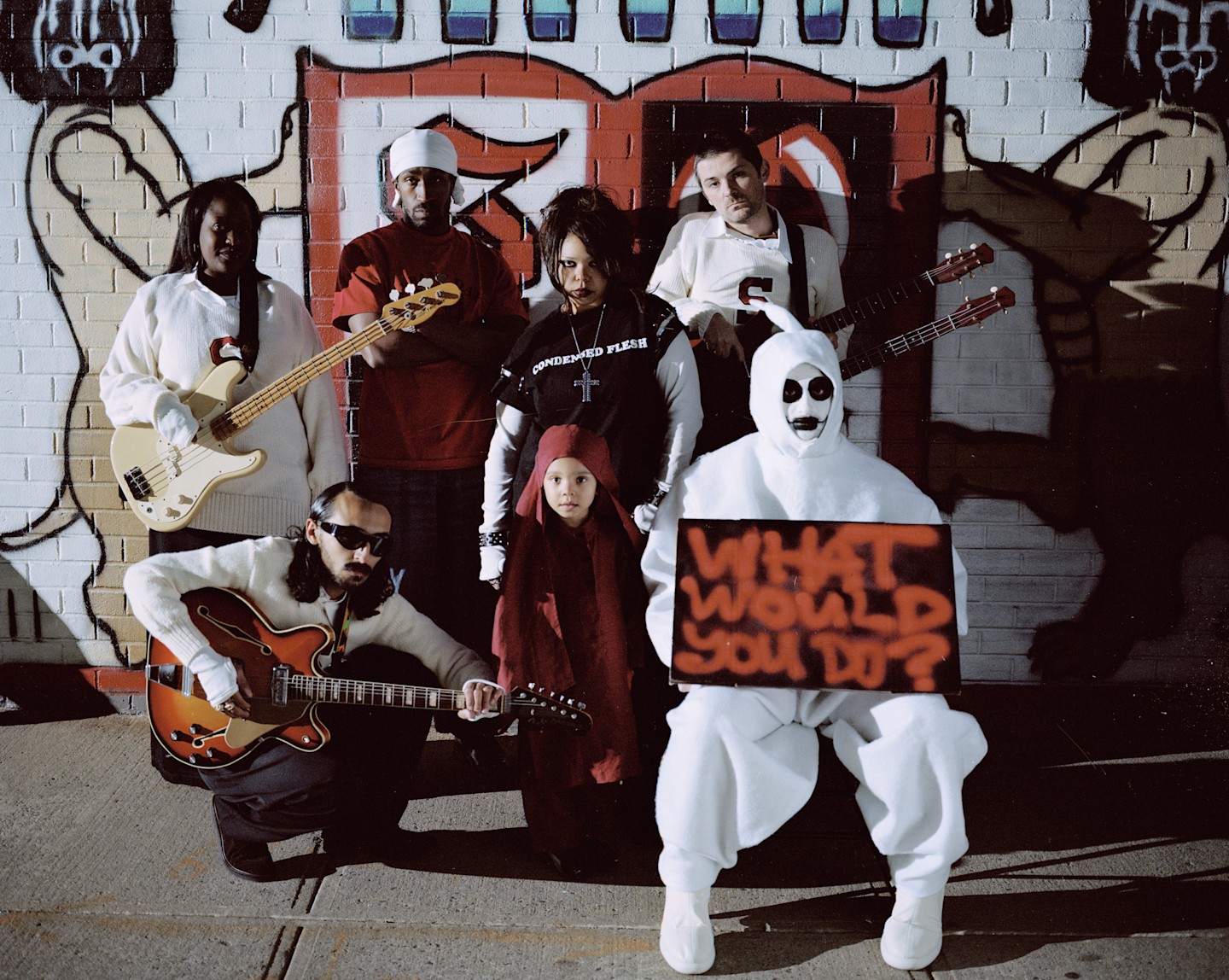
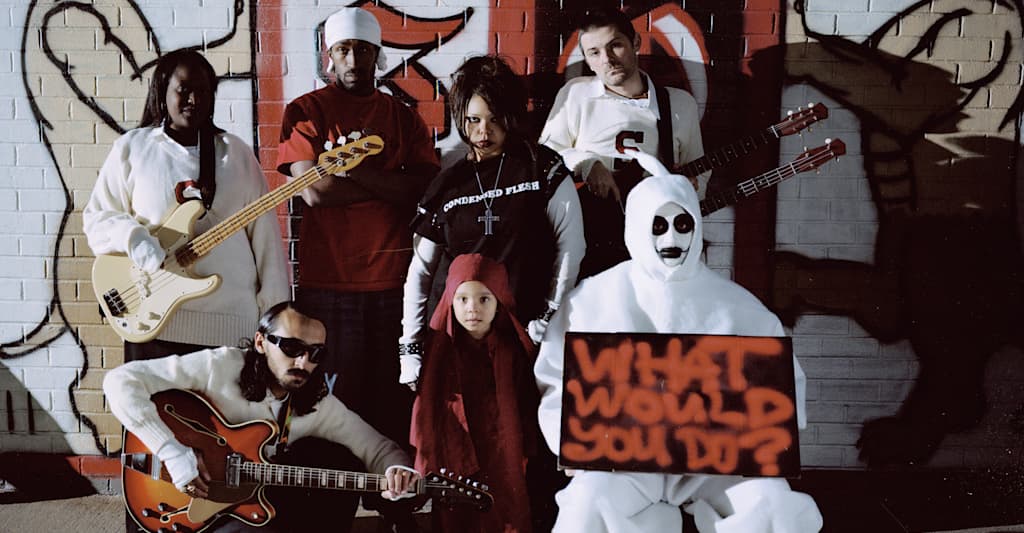
Standing On The Corner approached Standing on the Corner II with newfound thematic and structural clarity. Their latest album marks the first full-length from the New York experimental ensemble since 2017’s masterpiece Red Burns, but the group has been far from dormant in the years since. Even without co-founder Jaspar Marsalis, who left the ensemble to record as Slauson Malone in 2019, the critical darlings were on a stunning trajectory, working with major players like MIKE, Earl Sweatshirt, and Solange.
“When we were starting to release our music, [marketing] was not at all relevant,” Escobar said. “Now it’s relevant because we’re contracted to a record label. The stakes are different, and when you see that things have changed, you have to raise the stakes. Or you die.”
I want to clarify that bringing you to see what’s left of Half-A-Mill was not so much to elucidate the obvious metaphor that his fading image represents for the neighborhood at large, but more so to make a comment on the role the media plays in detaching art from its connection to its cultural context of production, expediting the slow death of local cultures and their lores.
Mythology is essential to every society and perhaps just as important is the means by which those myths travel and how they are communicated. Where the fate of a tradition, or a custom, or a local secret, or any “artifact” imbued with cultural significance, used to lie with the lips of those who passed them onwards communally one ear at a time, such things are no longer dealt with exclusively or quite so sensitively as we constantly see this debasement of Black / Brown cultures falling victim to the ingestion into and demands of a different system of knowledge, values, understanding, etc.
Much like the troves of looted African art that still lines the halls and walls of many Western colonial powers’ art institutions, this transference of context is more astutely understood also as the loss of their essence and thus their significance, rendering them effectively dead; Their new context not only imprisons them for the purpose of ‘viewing’ and objectification, but wholly subjugates their intended function.
I see little difference between the reduction and sterilization that happens to a Dogon Kanaga mask when it becomes a museum object and a Neighborhood’s local legend when it becomes a footnote in a Genius.com annotation or incorrectly referenced unscrupulously in an album review.
Escobar’s effort to incorporate these “artifacts” is his form of memorial, he tells me, for both the dead and the living. Standing on the Corner II features the likes of Solange, Danny Brown and Styles P, but references everything from Sonia Sanchez, Frank Lloyd Wright, Aaliyah, and Chuck Berry. And though Escobar has built his life around a fundamental distrust of the culture industry, it’s clear that his omnivorous appetite for culture defines his artistry.