

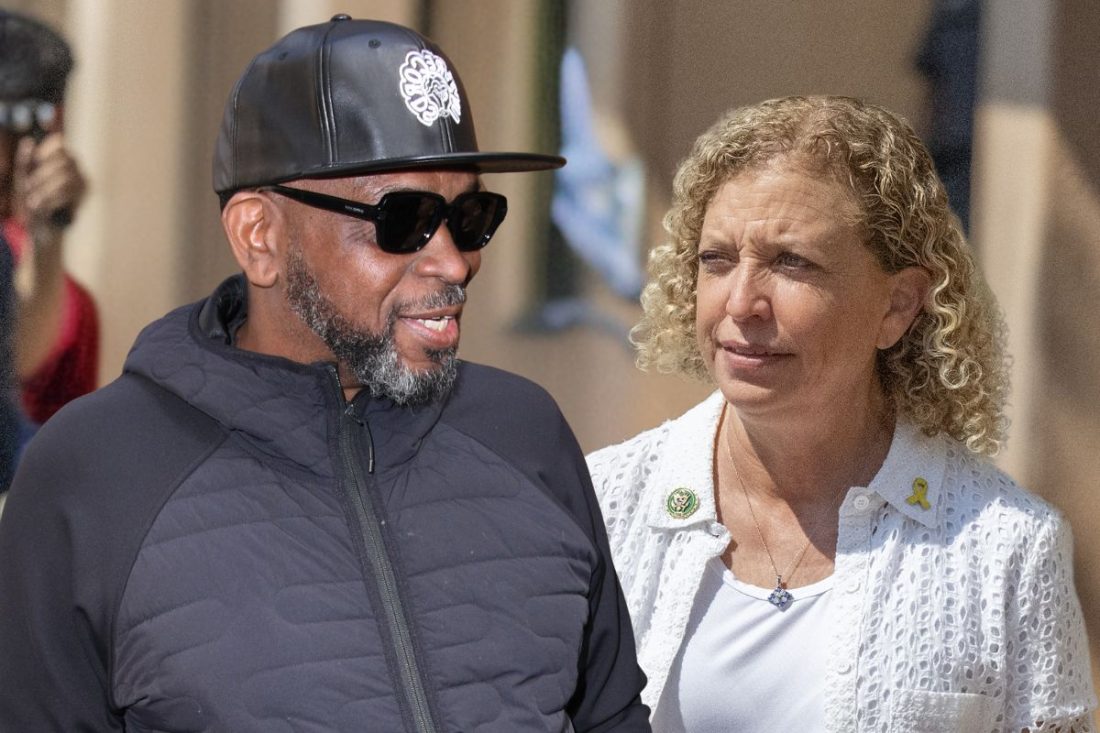
Luther Campbell, the legendary 2 Live Crew pioneer known to many as Uncle Luke, officially conceded his congressional primary race this past Tuesday. Despite the electoral outcome, the rapper and community activist left the Broward County political landscape with a poignant final warning regarding the state of Black political power.
In a formal statement released following the announcement of the results, Campbell expressed his gratitude to his supporters and offered a message of faith. “I believe God is always in control. Tonight, God decided that serving in Congress was not the assignment He had for me at this moment. I accept that, and I will wait faithfully for whatever assignment He has for me next,” he stated.
The unofficial election-night tally indicated that incumbent Debbie Wasserman Schultz secured 30,480 votes, accounting for 45.32 percent of the 67,260 ballots cast in the Democratic primary. Following the results, Dale Holness trailed with 15,547 votes, while Elijah Manley and Sheila Cherfilus-McCormick garnered 9,367 and 6,187 votes, respectively. Campbell finished the race with 5,679 votes.
While the four Black candidates collectively received 36,780 votes—representing 54.68 percent of the total—the plurality-based system allowed Wasserman Schultz to advance without needing an absolute majority. Prior to the election, Campbell had voiced concerns to AllHipHop regarding the Congressional Black Caucus’s silence, which he argued facilitated the co-opting of political power in a district historically held by Black representatives.
“Their silence gives her the opportunity to run around telling, in my opinion lies that, you know, they support her. They support her doing this which is again erasing another African-American seat to be represented by an African-American district.”
Reports from CBS Miami noted that Campbell and his fellow Black candidates had discussed the possibility of consolidating the field before the qualifying deadline, though no formal agreement was reached. The district has been a stronghold for Black representation since Alcee Hastings was elected in 1992, a legacy that remained central to the campaign’s narrative.
Reflecting on the broader implications of the race, Campbell emphasized that his efforts were not in vain. “We brought people together, energized voters, and exposed serious deficiencies that must be addressed within the Congressional Black Caucus and the broader political process. Those conversations cannot end because this election is over,” he concluded. “We may not have won the seat, but our work for the people does not stop here.”
Wasserman Schultz is now set to advance to the November 3 general election, where she will face Republican Brent Andersen and independent candidate Kedner Maxime.